Finding the right hearing aid can feel overwhelming. A quick internet search returns thousands of options, and if you read the marketing materials for all of them, you'd think every single one is the best hearing aid in the world. That's clearly impossible.
So how do hearing care professionals actually determine which hearing aid is right for you? After years of fitting patients at my clinic, I've narrowed it down to four key things.
Your Hearing Loss Severity and Configuration
This is always the first place to start. Without understanding the severity and configuration of your hearing loss, it's virtually impossible to determine which hearing aid is most appropriate.
When you look at an audiogram, the X's represent your left ear and the O's your right. The further down those markings fall on the graph, the worse your hearing is. Depending on where they land, your hearing loss will be classified as mild, moderate, moderately severe, severe, or profound. You wouldn't select the same hearing aid for a profound loss as you would for a mild one.
Configuration matters just as much. A high-frequency hearing loss requires a hearing aid that can hit high-frequency prescriptive targets — something we verify using Real Ear Measurements.
Some hearing aid styles simply aren't capable of doing that well. A flat hearing loss, where you have reduced hearing across low, mid, and high frequencies, may call for an entirely different style and setup.
Get the selection wrong, and no amount of programming will make that hearing aid perform the way it should.
The Features You Actually Need
Some features are nice to have. Others are non-negotiable depending on your lifestyle. These are different for everyone.
If you have finger dexterity challenges, a rechargeable hearing aid makes far more sense than one that uses tiny disposable batteries. If you struggle to understand speech on the phone or follow dialogue on TV, Bluetooth streaming directly to your hearing aids can make a significant difference. If you spend time outdoors or in demanding environments, the IP rating of a device — its resistance to moisture, sweat, and debris — may be a top priority.
Artificial intelligence is another feature worth understanding. Hearing aids that use a Deep Neural Network to separate speech from background noise tend to outperform those relying on older, manually programmed algorithms. The difference in noisy environments can be substantial.
There are nearly unlimited features to consider, but the right ones are the ones that match your specific hearing needs and daily life, not what sounds impressive on a spec sheet.
Your Personal Preferences
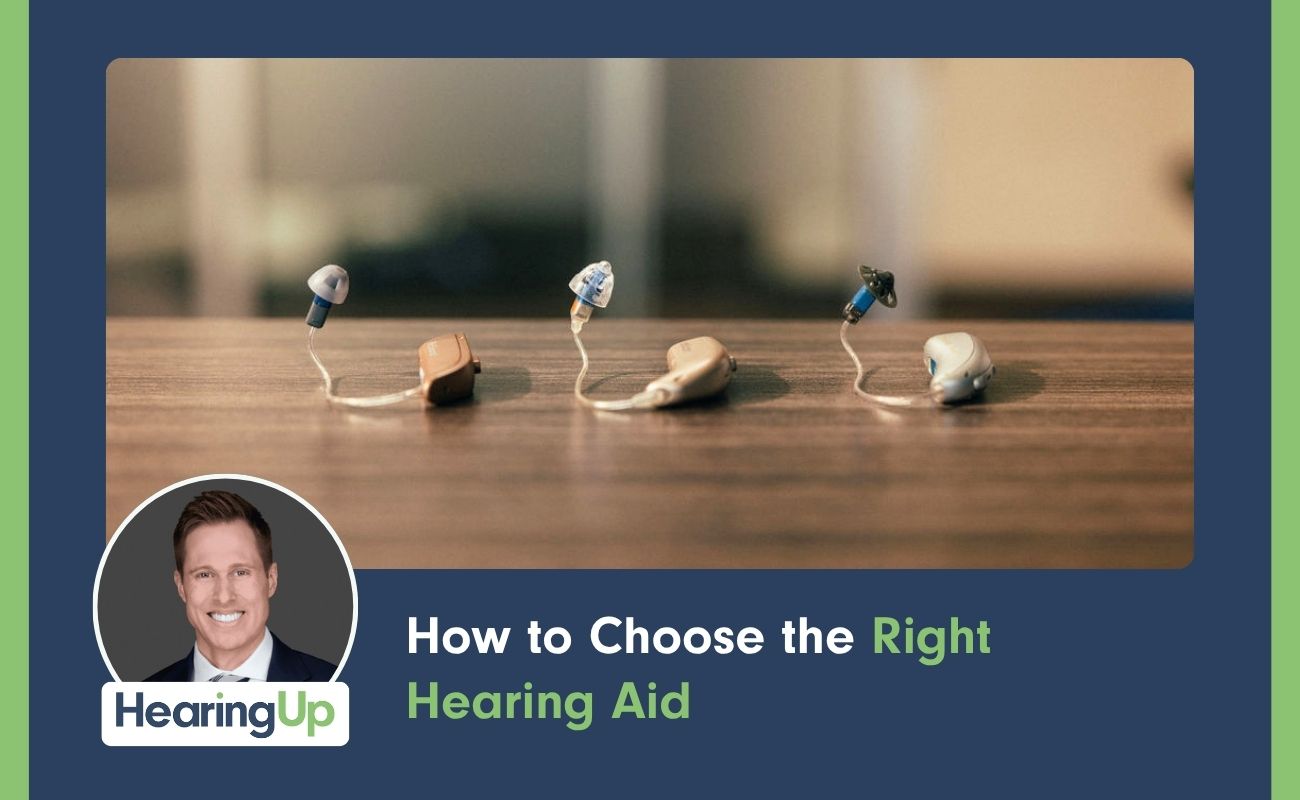
Needs and preferences aren't the same thing, and both matter. Some people want their hearing aids to be as discreet as possible. Others actually prefer that people can see them, so communication partners know how to make accommodations. Some people don't have much space behind the ear and prefer a device that sits entirely in the ear canal. Some prefer rubber domes while others do better with custom ear molds. Many people want app connectivity so they can make adjustments from their phone rather than hunting for a small push button.
These preferences are completely valid and should be part of the conversation with your audiologist from the very beginning.
How Your Needs Will Change Over Time
This one is often overlooked, and it's one of the most important factors. A good hearing care professional doesn't just fit you for today; they think ahead.
If your hearing loss is progressing, you need a device that can accommodate greater amplification needs in the future. If Bluetooth LE Audio or Auracast connectivity isn't something you need right now but might benefit from later, it's worth choosing a device that already supports it. Selecting a hearing aid without considering what the next five years might look like can mean having to purchase new devices earlier than necessary.
At my clinic, a thorough evaluation and consultation typically takes anywhere from 90 minutes to two hours before I feel confident recommending the right device. That time investment matters — and it's the kind of care you should expect from any hearing care professional you work with.
Find a HearingUp Provider Near You
If you're ready to take the next step, I'd encourage you to find a hearing care professional through the HearingUp Provider Network at HearingUp.com.
Every provider in the network has been personally vetted by me and is committed to following comprehensive best practices — including Real Ear Measurement — so you can be confident you're receiving the level of care that leads to real results. You don't have to figure this out alone.
The right provider will guide you through each of these four factors and help you find the hearing aid that fits your life, both now and into the future.
Dr. Cliff's Pros and Cons for

.png)