Dr. Cliff’s videos

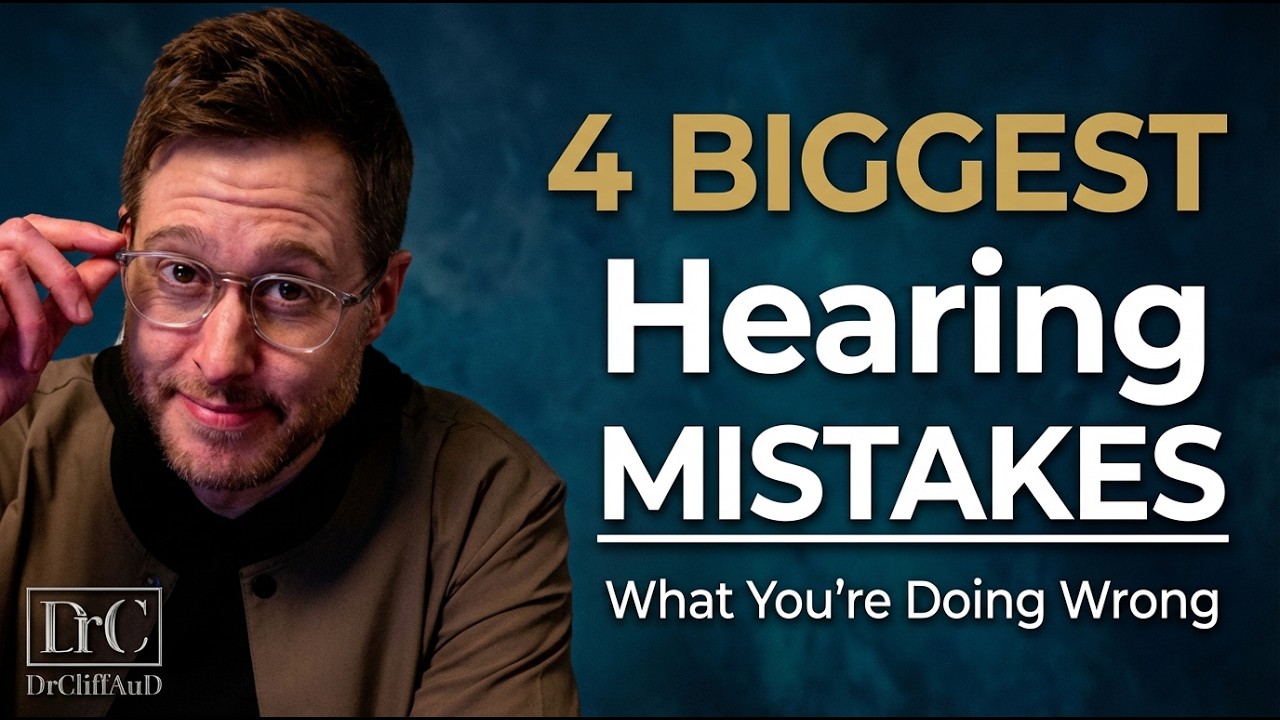
Are You Making These 4 Hearing Mistakes?

Dr. Cliff Olson shares his own hearing history and explains four common hearing mistakes, from skipping hearing protection to choosing the wrong hearing aid technology.

Hearing HealthMarch 2026On the DrCliffAuD channel
Watch the video

When I was young, I'll admit I wasn't very responsible with my hearing. By the age of 19, I already had a hearing loss in my right ear. I'm not exactly sure what caused it. It could have been a viral attack, or it could have been something I did. My buddy Nolan and I regularly drove around our hometown of Morris in his small Honda CRX with the entire trunk full of subwoofers, blasting music as loud as we could, and I followed that up by going to rock concerts without hearing protection. The concerts were fantastic, but my ears would ring like crazy and I'd have a temporary hearing loss for days.

Fortunately, when I served in the United States Marine Corps, I wore hearing protection at the range like my life depended on it, which is probably why I still have hearing left today. My military audiologist had such a profound effect on me that it's a big part of why I became an audiologist myself. Here are the four biggest mistakes I see people make with their hearing, so you can be smarter about yours than I was.

Mistake 1. Not Protecting Your Hearing

Noise exposure damages the tiny, microscopic outer hair cells inside your cochlea, which is your hearing organ. Once those hair cells are damaged, they don't come back. Firecrackers, power tools, firearms, lawnmowers, leaf blowers and, yes, rock concerts can all damage your hearing, especially with repeated exposure.

The good news is that this type of hearing loss is 100% preventable. The easiest way to prevent it is to avoid really noisy situations. When you can't, like when you have to mow the lawn (something my parents made my brothers and me do growing up), wear hearing protection.

You can damage your hearing in two ways. Lower-level noise over a long period, like a lawnmower, can cause permanent damage if you're around it long enough. A very loud, instantaneous sound, like a firecracker going off close to you, only needs to happen once, for a split second, to cause permanent damage. In both cases, earmuffs or earplugs protect you.

  • For concerts and music, filtered musicians plugs such as Phonak's Serenity Choice or custom Serenity Choice Plus make music sound natural, just at a softer level.
  • For maximum protection, like starting a leaf blower or going to the gun range, insert foam earplugs about three-quarters of the way into your ear canal, and consider wearing earmuffs over them.

A little prevention goes a long way, and it's something I wish I had done a lot more of when I was younger. For more ways to protect what you have, read my post on the best way to stop hearing loss.

Mistake 2. Ignoring the Early Signs of Hearing Loss

Hearing loss is usually gradual, and most people don't realize it's happening. Your brain compensates for missing sound, especially if you're cognitively strong, so you could have a severe high-frequency hearing loss and not even know it because your brain is filling in the gaps for you. Often your family and friends notice before you do.

Eventually, though, the warning signs show up:

  • People sound like they're mumbling, even though you can hear that they're talking.
  • Restaurant noise makes it hard to understand the people you're eating with.
  • You hear fine until someone isn't facing you and you can't see their mouth.
  • Ringing or buzzing in your ears seems to overpower people's voices, even if you hear fine in a quiet room.

I was fortunate that the military found the hearing loss in my right ear so early. Without that, I don't know if I would have started protecting my hearing or paid attention to the warning signs. Other than protecting your hearing, the smartest thing you can do is get your hearing tested as soon as you suspect a problem. An online hearing screener, like the one on Phonak's website, is a quick first step. If it suggests you might have a hearing loss, schedule a comprehensive hearing evaluation with a licensed hearing care professional. My video on the top signs you may have hearing loss goes into more detail.

Mistake 3. Deciding Not to Treat Your Hearing Loss

If you think you're just getting by, you may be creating more problems than you realize. Your brain does an impressive job of filling in what you're missing, but it isn't perfect. You end up asking people to repeat themselves, because with hearing loss you can often hear that people are talking without understanding what they're saying. It can also lead to awkward moments where you think you understood someone, reply with a comment that's completely off the wall, and get a strange look in return.

The cognitive load of constantly filling in those gaps leads to mental exhaustion by the end of the day at best, and a higher risk of cognitive decline and dementia later in life at worst. The ACHIEVE study and the ENHANCE study both looked at this link between hearing loss and cognition, and hearing aid adoption rates have increased over the past several years. I wouldn't be surprised if studies like these are part of the reason. You can read more in my post on how hearing aids may slow cognitive decline.

Mistake 4. Choosing the Wrong Technology

Once you decide to treat your hearing loss, the next mistake is choosing technology that isn't right for your type of hearing loss. Hearing aids restore access to the sounds your brain is missing, so you can understand what people say instead of relying on context or visual cues.

Today's hearing aids are substantially better than what we had a few decades ago. I was born in the '80s, so nothing against that decade, but by today's standards those hearing aids would be horrible. As of March 2026 when I filmed this, a hearing aid like the Phonak Audéo Infinio Ultra Sphere is rechargeable, has Bluetooth connectivity and carries an IP68 rating, which makes it practically waterproof. Its DEEPSONIC chip is trained with a deep neural network, using artificial intelligence to separate speech from background noise better than ever before. I go deeper on that in my Phonak Infinio Ultra Sphere review.

If that style isn't what you want, there are other options, including custom in-the-ear hearing aids, power behind-the-ear hearing aids and extended-wear invisible hearing aids. In Phonak's lineup, those are the Virto Infinio, Naída and Lyric. Whatever your hearing loss and your specific wants and needs, there's a hearing aid technology that's right for you.

Don't Neglect Your Hearing

The worst thing you can do is neglect your hearing entirely. Ideally, you prevent hearing loss by using hearing protection. If you can't, or if your hearing loss comes from something other than noise, detect it early, treat it as soon as possible and use the right hearing aid technology to do it. I hope sharing this helps me pass forward what my military audiologist taught me.

Get Your Hearing Checked by a Provider Who Follows Best Practices

A HearingUp Provider Network member can test your hearing, explain your results and help you choose the right technology for your hearing loss. Every provider in the network is vetted and follows comprehensive audiologic best practices.

Find a HearingUp Provider Near You

Video transcript

This is the worst thing you can do when it comes to your hearing. >> Hey guys, Cliff Olson, Doctor of Audiology and founder of Applied Hearing Solutions in Phoenix, Arizona. And in this video, I'm talking about all the mistakes that people make when it comes to their hearing and how you can avoid them. Okay, so when I was young, I'll admit I was not very responsible when it came to my hearing.

By the age of 19, I already had a hearing loss in my right ear. Now, to be fair, I'm not exactly what sure caused my hearing loss. It could have been a viral attack or it could have been something irresponsible that I did when I was younger. Regularly, myself and my buddy Nolan would drive around in his really small Honda CRX and the entire trunk of his car was filled with subwoofers.

Now, we thought we were pretty cool driving around our hometown of Morris blasting music as loud as we possibly could, but needless to say, we probably damaged our hearing a little bit. Now, I followed this great decision by going to rock concerts without hearing protection. Now, I will admit that my experience at these rock concerts was fantastic, but my ears would ring like crazy and I would have a temporary hearing loss for days.

Fortunately, when I served in the United States Marine Corps, I would wear hearing protection like my life depended on it when I was at the range, which is fortunate because otherwise I might not have any hearing left right now. Unfortunately, not protecting your hearing is one of the dumbest mistakes that you could possibly make, but it's not the only one. That's why in this video, I'm going to share the top four mistakes that most people make when it comes to their hearing so you can be smarter than the rest of us.

But before I do, do me a huge favor and click the like button. It really helps out the channel. And if you are not yet subscribed to the channel with notifications turned on, go ahead and do that as well. It's greatly appreciated. And a huge shout-out to Phonak for sponsoring today's video, but more on them in a little bit. As you can tell, the first mistake that people make with their hearing is not protecting it.

Now, the reason why not protecting your hearing is one of these incredibly dumb mistakes that we all make is because noise exposure damages the tiny little microscopic outer hair cells inside of your cochlea, which is your hearing organ. And once those hair cells become damaged, they do not come back. Things like firecrackers, power tools, firearms, lawnmowers, leaf blowers, and yes, rock concerts can all damage your hearing immensely, especially with repeat exposure.

But the best thing about this particular type of hearing loss is that it's 100% preventable, as long as you're smarter than I was. You can easily prevent this type of hearing loss just by avoiding really noisy situations. Unless you're not able to avoid noisy situations like mowing your lawn, like my parents used to make me and my brothers do when I was younger, but if you have to do it, make sure that you protect your hearing with hearing protection.

Now, it's important to understand that you can damage your hearing with either low-level noise for a long period of time, or high-level noise that's instantaneous. Now, like I mentioned before, if you're mowing your lawn, that is a relatively low level of noise, but if you're in that amount of noise for a long enough period of time, you can damage your hearing permanently. On the other hand, a firecracker goes off close to you, that is a really loud level noise, and it only needs to happen one time for a split second for it to cause permanent damage to your hearing.

In either case, you can easily protect your hearing by wearing hearing protection like earmuffs or earplugs. If you're someone who enjoys going to rock concerts like I do, you can easily wear a pair of Phonak Serenity Choice or Custom Serenity Choice Plus Filtered Musicians Plugs. This type of earplug will make the music sound natural just at a softer level. If you're looking for maximum protection, like if you're going to go start the leaf blower, or if you're going to go to the gun range, then you're going to want to wear a pair of foam earplugs inserted 3/4 of the way into your ear canal, and maybe even have a pair of earmuffs on top of those.

A little bit of prevention can go a long way when it comes to preserving your hearing, and something I wish I would have done a lot more when I was younger. Now, the second biggest mistake that a lot of people make when it comes to their hearing is ignoring the early signs of hearing loss. Hearing loss is usually a really gradual phenomenon, and most individuals do not even realize that they're experiencing a hearing loss.

The The thing about it is that the human brain usually compensates for missing auditory information, especially if you're cognitively strong. The crazy thing is is that you could have a severe high-frequency hearing loss and not even realize it because your brain is filling the missing gaps of what you're not hearing for you. Often times your family members and friends will start to notice this particular type of hearing loss before you will.

But eventually you're going to start noticing the clear warning signs that you're experiencing a hearing loss. People will sound like they're mumbling to you even though you feel like you can hear them talking. When you go to restaurants do you feel like the restaurant noise is too much for you to be able to understand the people who you're eating with? Or you feel like you can hear fine except for when someone's not facing you and you can't see their mouth when they're talking.

And if you've gotten to the point where you have ringing and buzzing inside of your ears that you feel is overpowering your ability to hear people talking to you, that is a very clear sign of hearing loss even if you feel like you hear fine when you're in a quiet room. I was fortunate that the military found a hearing loss in my right ear at such an early age because without that I have no idea if I would have actually started to protect my hearing and I would have never paid attention to the early warning signs of hearing loss.

The smartest thing that you can do other than protecting your hearing to prevent a noise-induced hearing loss is to get your hearing tested as soon as you suspect that you might have a hearing loss. If you want a way to just quickly test your hearing right now, you can always go over to phonak.com and take their online hearing screener. If the Phonak hearing screener happens to identify that you might have a hearing loss, that is the perfect opportunity for you to schedule an appointment with a licensed hearing care professional for a comprehensive hearing evaluation.

If they identify that you do actually have a hearing loss, then you can start to discuss hearing treatment options, which leads me into the third biggest mistake that people make when it comes to their hearing, which is not making the decision to treat their hearing loss. If you think you're just getting by with your hearing loss, you could be creating more problems than you realize. Yes, your brain does do a pretty impressive job of filling in missing gaps of what you're you're hearing, but it's not perfect.

This leads to situations where you constantly have to ask people to repeat what they're saying because remember, when you have a hearing loss, often times you can hear that people are talking, you just don't understand what they're saying. Or can lead to awkward encounters where someone says something to you, you think you understand what they say, and then you reply with a comment that is completely off the wall, and they look at you like you're crazy.

Not to mention the cognitive load of constantly having to fill in these missing gaps leads to mental exhaustion by the end of the day at best, but a higher risk of cognitive decline and dementia later in life at worst. The Achieve study and the Enhance study, which are two studies that looked at this link between hearing loss and cognition, were supported by Sonova's research program and an in-kind donation of Phonak hearing aids to complete the studies.

Over the past several years, hearing aid adoption rates have actually increased, and I would not be surprised if it was due to studies like these. And if you have not had a chance to read over these studies, I will have both of them linked in the description for you. Now, hopefully you're smart and you do make the decision to treat your hearing loss if you have a hearing loss, but that comes along with the adoption usually of hearing aid technology.

But this is the fourth mistake that people often make when it comes to their hearing, which is not selecting the right technology for their particular type of hearing loss. Hearing aids work by replacing the access to missing sounds that your brain does not receive because of the hearing loss. This way you can do a lot less guessing because you can hear and understand what people are saying to you rather than having to rely on context for what they're talking about or having to rely on visual cues.

And you're lucky because hearing aid technology today is substantially better than the technology that we had just a few decades ago. Now, nothing against the 1980s cuz I was born in the '80s, but if our hearing aid technology today was from back then, I kind of wouldn't even blame you if you didn't want to use hearing aids. Sure, those devices back then were definitely better than nothing, but based on today's standards, those hearing aids would be horrible.

Nowadays, hearing aids can pretty much do anything. Take the Phonak Audeo Ultra Sphere Infinia. These hearing aids are rechargeable, they have wireless Bluetooth connectivity, they have an IP68 rating, which pretty much makes them waterproof. And when it comes to improving your hearing, they're among the best. The deep sonic chip inside of these hearing aids are trained using a deep neural network, which uses artificial intelligence to separate speech from background noise better than ever before.

Go ahead and have a listen for yourself. >> I can play a drum song and I would say that so behind the beat because when I press it down all of sudden the pitch of stuff was behind by like 10 milliseconds. I mean, it's enough to make the feel off. >> Now, if that doesn't make you want to get a pair of these hearing aids, I don't know what does.

But even if the spheres are not the style of hearing aid that you're looking for, you have a variety of other options. You have the Phonak Virto Infinia line of custom in the ear hearing aids, the Phonak Naida power behind the ear hearing aids, or the invisible Phonak Lyric extended wear hearing aids. Basically, no matter what your hearing loss is or what your specific wants and needs are, there's a hearing aid technology that's right for you.

At the end of the day, the worst thing that you can do with your hearing is just neglect it entirely. Ideally, you're preventing your hearing loss altogether by using hearing protection. But if you cannot protect your hearing or your hearing loss is created by something other than noise exposure, you need to make sure that you detect your hearing loss. And once you identify you do have a hearing loss, you need to treat your hearing loss as soon as humanly possible and use the right hearing aid technology to do it.

I think it's quite clear that my military audiologist had a pretty profound effect on me considering that I'm an audiologist myself today largely because of that encounter. And if they did not convey the importance of hearing health with me back then, who knows how well I'd be hearing right now. I just hope that I'm able to pass it forward by sharing this information with you so you can be smart about your hearing.

Heard enough? The next step is a proper fitting.

Whatever hearing aid you end up choosing, it still needs Real Ear Measurement: the step where your provider puts a thin probe microphone in your ear canal, measures what the hearing aid is actually delivering, and adjusts it to your prescription. A HearingUp provider follows Best Practices on every fitting.

Find a HearingUp provider Browse all videos